

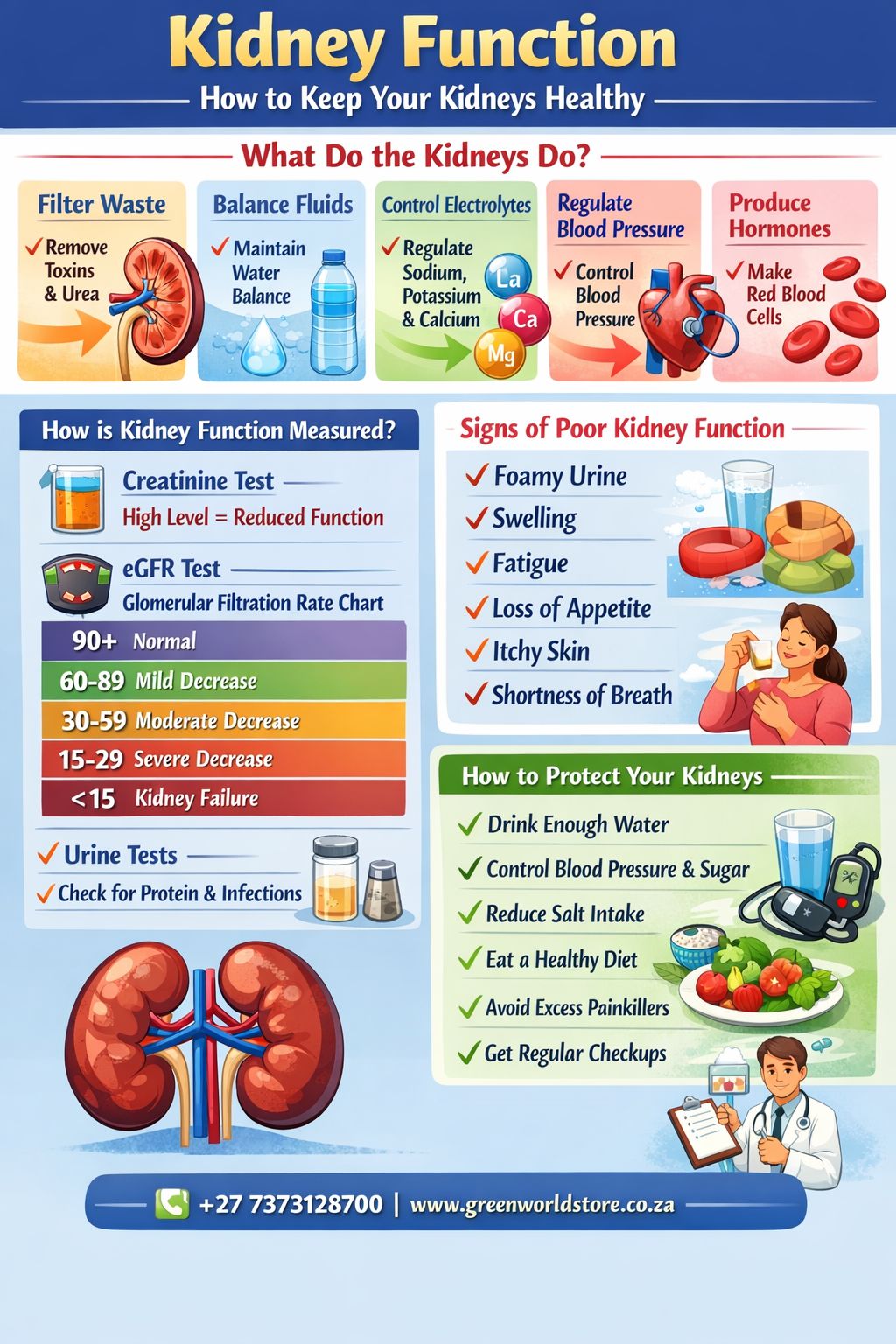
Kidney function refers to how well your kidneys filter blood, remove waste, and keep your body balanced. The kidneys are essential organs that work 24/7 to keep you healthy.

What do the kidneys do?
1. Filter waste from the blood

Remove toxins and waste products like creatinine and urea

These wastes are excreted through urine
2. Balance fluids
Maintain the right amount of water in your body
Prevent dehydration or fluid overload
3. Control electrolytes
Keep levels of sodium, potassium, and calcium stable
Important for nerves, muscles, and heart function
4. Regulate blood pressure
Produce hormones that help control blood pressure
5. Produce hormones
Help make red blood cells (via erythropoietin)
Activate vitamin D for healthy bones

How is kidney function measured?

Creatinine (blood test)
Waste product from muscles
High levels may mean reduced kidney function
eGFR (estimated Glomerular Filtration Rate)
Shows how well kidneys filter blood
Measured in mL/min/1.73m²
eGFR Kidney Function:
90+ Normal
60–89 Mild decrease
30–59 Moderate decrease (Stage 3)
15–29 Severe decrease
<15 Kidney failure
Urine tests

Check for protein (foamy urine can be a sign)
Detect infections or damage

Signs of poor kidney function
Foamy urine
Swelling (face, hands, feet)
Fatigue
Loss of appetite
Itchy skin
Shortness of breath

How to protect kidney function
Drink enough water
Control blood pressure and blood sugar
Reduce salt intake
Avoid excessive painkillers
Eat a balanced diet
Get regular checkups
If you want, I can:

Interpret your lab results (creatinine, eGFR, urine)
Help you understand if you’re in Stage 2 or Stage 3
Give you a kidney-friendly diet plan
#mentalhealth
#healthylifestyle
#highlightseveryone
#naturalremedies
#healthyeating
- For More Information, contact the Lupus Foundation of Fiji on 869 4112 or check us out on FB #lupusfoundationoffiji