
Anti-dsDNA
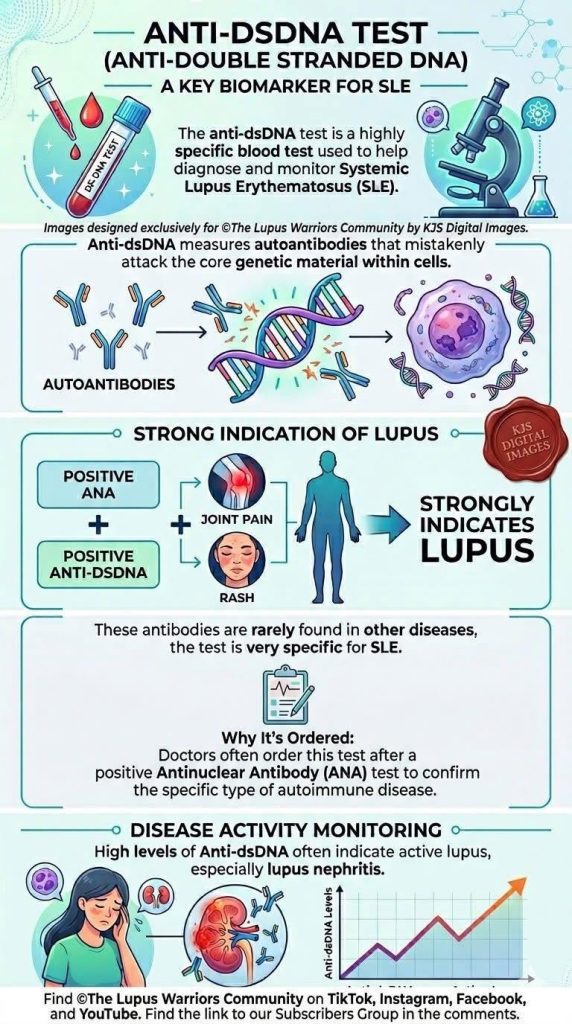
The anti-dsDNA (anti-double stranded DNA) test is a highly specific blood test used to help diagnose and monitor Systemic Lupus Erythematosus (SLE), commonly known as lupus. It measures autoantibodies that mistakenly attack the core genetic material within cells. A positive result, especially in the context of a positive ANA test and symptoms like joint pain or rash, strongly indicates lupus.
What is the Anti-dsDNA Test Used For?
Diagnosing Lupus:
Because these antibodies are rarely found in other diseases, the test is very specific for SLE.
Monitoring Disease Activity:
High levels often indicate active lupus (especially lupus nephritis, or kidney inflammation) and may decrease with successful treatment.
Assessing Prognosis:
High-affinity antibodies are associated with a higher likelihood of severe kidney disease.
Understanding the Results
Positive Test: A positive result suggests that the patient likely has SLE, particularly if the level is high.
Negative Test: A negative result does not rule out lupus, as roughly 30-50% of people with SLE may test negative.
High Levels: Strongly linked with acute lupus flares.
Why It’s Ordered:
Doctors often order this test after a positive Antinuclear Antibody (ANA) test to confirm the specific type of autoimmune disease.
Symptoms: This test is usually ordered when a patient shows signs of lupus, such as joint pain, chronic fatigue, or a butterfly-shaped rash on the face.
Not Exclusive to Lupus: Although highly specific to lupus, it is not 100% exclusive; in rare cases, other autoimmune conditions might show low levels of these antibodies.
#lupus #lupuswarrior #thelupuswarriorscommunity #lupusawarenessmonth #lupusawareness
This information is for educational purposes only and does not constitute medical advice. Consult a healthcare professional for diagnosis and treatment.